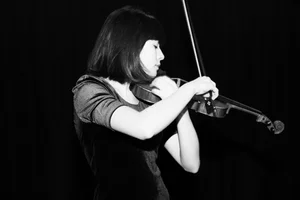
Recording Violin for Visual Storytelling
There is a well known saying that a picture tells a thousand words.
A single image can communicate information instantly. It can show us a place, a person, a moment in time or an unfolding story. Through photographs, film and visual media, we understand what is happening before a single word is spoken.
Yet images alone do not always tell us how to feel.
This is where music becomes so powerful.
A carefully chosen piece of music can introduce tension, nostalgia, joy, anticipation or wonder. It can deepen our emotional connection to what we are seeing and guide us towards a richer understanding of the story being told.
Together, image and music create something far more powerful than either can achieve alone.
This relationship sits at the heart of visual storytelling. Whether in film, advertising, documentaries, social media or creative campaigns, music helps transform visual content into an emotional experience.
For musicians working within visual media, the goal is not simply to accompany images. It is to contribute to the narrative itself.
If you're curious about what happens behind the scenes of projects like these, you may also enjoy reading What Does a Session Violinist Actually Do?, where I explore the creative, technical and collaborative role of a professional recording violinist.
Why Music Matters in Visual Media
Human beings rarely experience stories through a single sense.
Film, television, advertising and digital media combine image, sound, movement and narrative into a unified experience.
Whilst visuals provide information, music often provides emotional context.
Music can create anticipation before anything happens on screen, heighten tension without relying on dialogue, introduce warmth or vulnerability, reinforce memory and guide emotional transitions from one scene to the next. In many cases, audiences respond instinctively to these cues without ever consciously noticing them.
The music becomes part of the storytelling language itself.
Most people experience this every day on social media. A simple Instagram Reel accompanied by a cinematic soundtrack can feel nostalgic or dramatic. Replace the music with an upbeat pop track and the same images suddenly feel celebratory and energetic. The visuals remain unchanged, yet the emotional experience shifts entirely.
This demonstrates something important about music. It does not simply accompany images; it influences how we engage with them.
Why the Violin Works So Well on Screen
Why do certain instruments appear so frequently within visual storytelling?
The violin has long been associated with film, television, documentaries and advertising because of its extraordinary expressive range.
Its register sits remarkably close to the human voice and it can communicate intimacy, fragility, longing, excitement or joy within a single musical phrase.
Unlike many instruments, the violin can move effortlessly between foreground and background. It can carry a melody with clarity when required, or sit quietly within a wider musical landscape, adding colour and emotional depth without demanding attention.
This versatility makes it particularly valuable for visual media, where every creative decision ultimately serves the story.
Recording for Condé Nast Traveller
I experienced this especially clearly whilst working on a project commissioned by Condé Nast Traveller.
The film focused on Istria in Croatia, exploring fishing harbours, medieval streets and the unique character of the region.
My role was to create and record a violin arrangement inspired by a traditional Croatian folk melody.
What interested me most about the project was the relationship between the visuals and the music.
The violin was not simply added after the film had been created.
The imagery informed the pacing, phrasing and musical language that emerged throughout the piece. Certain scenes invited simplicity and restraint. Others encouraged movement, contrast and greater intensity.
The process felt less like accompanying a film and more like participating in a creative dialogue between image and sound.
The resulting recording demonstrates how music can contribute to narrative without relying on words or explicit explanation.
Creating Continuity Across a Story
Visual storytelling often depends upon continuity.
Audiences need to feel connected as scenes, images or ideas evolve.
Music plays an important role in creating that connection.
A recurring melodic idea can link different moments together. A familiar musical motif can return throughout a film, advertisement or visual campaign, helping audiences remain emotionally connected to the narrative as it develops.
Without this continuity, visual material can sometimes feel fragmented.
Music provides a thread that guides the audience through the experience, helping separate moments and feel connected to a larger whole.
Less Can Often Achieve More
One of the most common misconceptions about cinematic music is that it needs to be large, dramatic or constantly present.
In reality, some of the most effective moments are often the most restrained.
A single note placed carefully within the right context can carry enormous emotional weight.
Recording for visual media frequently requires this kind of discipline.
The goal is not necessarily to showcase the violin, but to serve the story.
This often means making decisions based on what the narrative requires rather than what the instrument is capable of displaying.
Collaboration Is Essential
Visual storytelling is inherently collaborative.
Directors, editors, producers, composers and musicians all contribute different perspectives.
Successful recording projects depend upon listening carefully to the wider creative vision.
Sometimes this involves performing precisely written material.
At other times, it involves improvisation, experimentation and creative exploration.
The strongest results often emerge when music and visuals are allowed to develop in conversation with one another rather than existing as separate elements.
Similar conversations take place beyond the recording studio. When performing in galleries and museums, music enters into a dialogue with paintings, sculpture and architecture in much the same way. I explore this idea further in The Role of Music in Gallery and Exhibition Spaces.
Why Live Instruments Continue to Matter
Technology has transformed the way music is created and recorded, yet audiences continue to respond deeply to live instruments.
The violin remains powerful because it carries traces of human gesture within every note.
Small variations in phrasing, articulation and tone communicate something personal and immediate.
In visual storytelling, those qualities help create emotional connection.
The audience may not always notice the violin consciously, but they often feel its presence nonetheless.
Violin Recording for Film, Visual Media and Creative Projects
I provide professional violin recording for film, visual media, commercial projects, cultural collaborations and creative productions across London and remotely.
Projects may involve bespoke arrangements, melodic development, layered violin parts or collaborative recording work designed to support narrative and visual storytelling.
If you're looking for a professional violinist for film, advertising, documentaries or creative productions, you can learn more about my studio recording and session work here:
Studio Recordings & Session Work →
You can also watch and listen to the Condé Nast Traveller Croatia feature, where the violin arrangement was created specifically to support the visual narrative: