The Role of Music in Gallery and Exhibition Spaces
When people visit a gallery or exhibition, they often arrive expecting to engage primarily through sight.
They anticipate paintings, sculpture, photography, installation work or moving image. The experience is typically understood as a visual one.
Yet some of the most memorable exhibitions focus not only on what visitors see, but also on what they feel whilst moving through the space.
This is where music can play a remarkable role.
Unlike visual artworks, music unfolds through time. It accompanies movement, influences perception and shapes the emotional character of a space in ways that are often subtle yet deeply felt.
In gallery and exhibition settings, live music does not compete with the artwork. At its best, it enriches the experience of encountering it.
Beyond Background Music
One of the most common misconceptions about live music at cultural events is that it functions simply as background sound.
In reality, music can significantly influence how visitors experience a space.
A carefully chosen performance may encourage visitors to slow their pace, spend longer with individual works and reflect more deeply on what they are seeing. It can establish a sense of occasion, strengthen the relationship between audience and artwork and gently influence the emotional tone of an exhibition without ever competing for attention.
These effects often happen quietly and without drawing attention to themselves.
Visitors may not consciously analyse the role of the music, yet they frequently experience the space differently because of it.
Music and the Experience of Space
Every gallery possesses its own character.
Some spaces feel intimate and reflective. Others are expansive and architectural. Contemporary installations may encourage exploration and movement, whilst historical collections often invite stillness and contemplation.
Live violin responds particularly well to these environments because of its versatility.
The instrument can fill a space gently and unobtrusively, creating atmosphere without overwhelming conversation or visual engagement. At other moments, it can become more expressive and present, helping mark key moments within an opening reception or cultural programme.
The relationship between sound and architecture is especially important.
Acoustics, layout and visitor movement all influence how music is experienced within a gallery environment. A performance should feel connected to the space itself rather than imposed upon it.
When Music Responds to Place
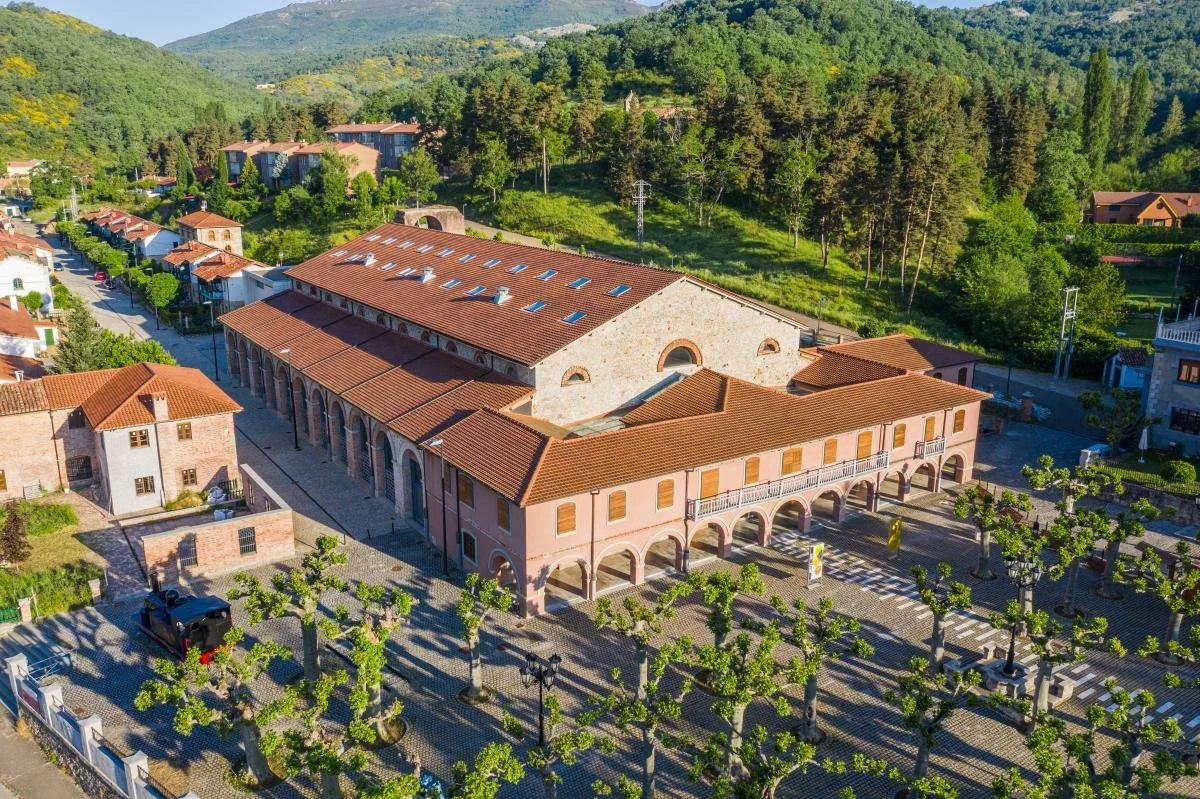
Museum of Iron and Steel and Mining of Castilla y León (MSM) in Sabero, Spain
One of the most memorable cultural events I have performed at was the opening of the Museum of Iron and Steel and Mining of Castilla y León (MSM) in Sabero, Spain.
Located within the former San Blas Ironworks, the museum occupies a historic industrial site and serves as an important centre for the preservation and promotion of the region's industrial heritage. Through its exhibitions, research and cultural programme, it celebrates the mining communities whose labour shaped one of Castilla y León's most significant industries, whilst preserving the collective memory of the people and ways of life connected to it. Today, the museum continues to host a wide range of cultural, educational and musical events throughout the year.
I performed as part of a string ensemble during the opening celebrations, immediately following the inaugural speeches. The requested repertoire consisted of carefully selected classical works that could accompany conversation naturally whilst remaining sympathetic to the character of the setting.
What stayed with me most, however, was the building itself.
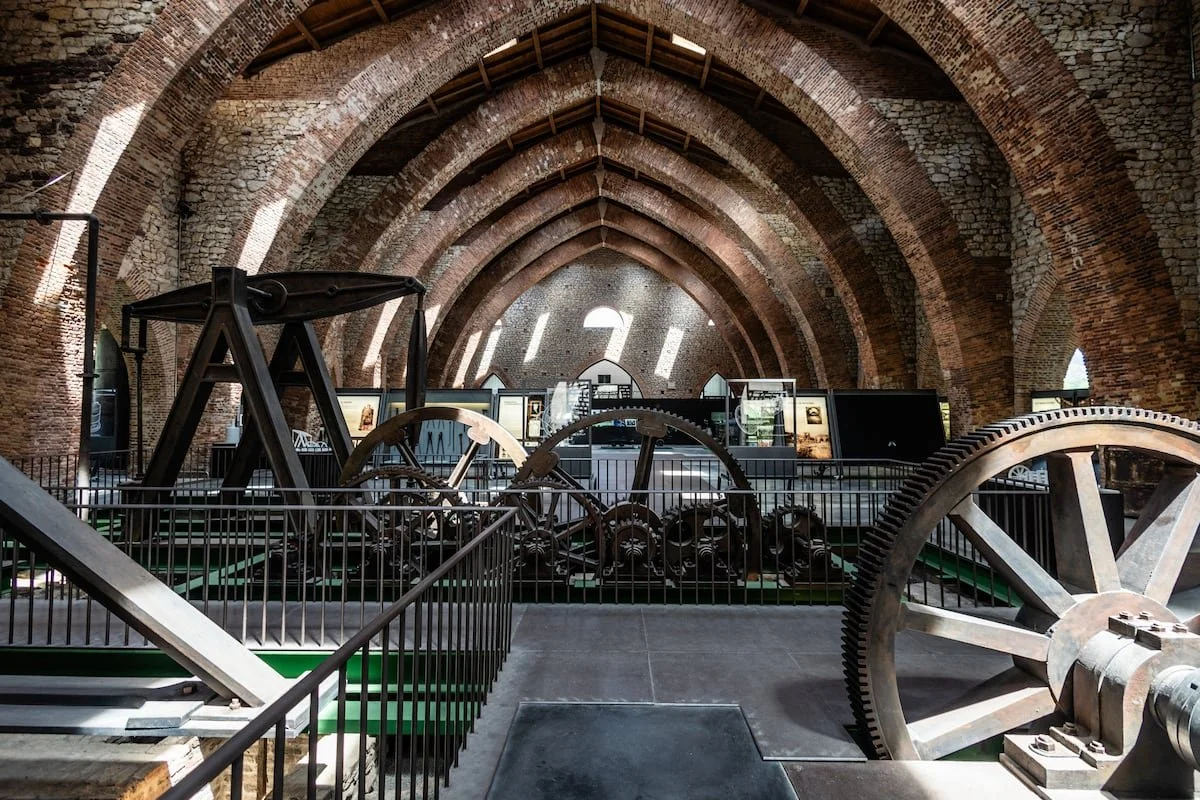
The interior space of the Museum of Iron and Steel and Mining of Castilla y León (MSM) in Sabero, Spain
The museum's expansive interior and exceptionally high ceilings created a remarkable sense of openness. As performers, we adapted our approach to the acoustics of the space, allowing the music to resonate naturally throughout the building.
At the same time, many of the exhibits explored the lives of miners who spent their working days underground in confined and demanding conditions.
The contrast between these two experiences was striking. The architecture invited openness and reflection, whilst the stories contained within the museum spoke of labour, endurance and community.
It was a powerful reminder that music within cultural spaces does not exist in isolation. It becomes part of a wider conversation between place, history and audience.
Creating Dialogue Between Art Forms
Some of the most rewarding cultural events emerge when different artistic disciplines enter into conversation with one another.
Visual art and music share much in common. Both explore narrative, structure, tension, rhythm, contrast and emotional expression, albeit through different mediums.
These conversations between sound and image extend well beyond gallery spaces. In film, advertising and digital media, music performs a remarkably similar role, guiding emotional responses without ever explaining them directly. I explore this relationship further in Recording Violin for Visual Storytelling.
A live performance can therefore create a dialogue with an exhibition rather than simply accompanying it.
The music may respond to themes within the artwork, the ambience of the exhibition or the broader ideas being explored by artists and curators.
In this sense, live music becomes part of the cultural experience itself.
It encourages audiences to engage with the exhibition from multiple perspectives and reminds us that artistic experiences are rarely confined to a single sense.
The Importance of Sensitivity
Performing within a gallery requires a different approach from many other events.
The objective is rarely to command attention.
Instead, the role of the musician is often to support the wider experience with sensitivity and awareness.
This requires careful consideration of:
repertoire selection
volume and projection
audience movement
exhibition themes
the balance between performance and conversation
In some settings, the most successful musical contribution is one that visitors notice gradually rather than immediately.
The performance becomes woven into the fabric of the event itself.
Repertoire for Galleries and Exhibitions
The choice of repertoire depends greatly on the nature of the exhibition and the audience attending.
Some gallery openings benefit from classical repertoire that encourages reflection and calmness. Others may call for contemporary arrangements, minimalist works or carefully selected improvisation.
Rather than imposing a fixed programme, I prefer to consider:
the purpose of the event
the identity of the organisation
the nature of the exhibition
the anticipated audience
the desired emotional atmosphere
The aim is always to create a musical experience that feels aligned with the wider artistic vision of the event.
Music as Cultural Hospitality
Gallery openings often bring together artists, curators, collectors, patrons and members of the public.
Many people are encountering the space, and one another, for the first time.
Live music can help create a sense of welcome.
It softens transitions as guests arrive, encourages people to remain within the space and contributes to an environment that feels thoughtful, generous and culturally engaging.
In this way, music serves not only the exhibition itself but also the community forming around it.
Why Live Violin Works Particularly Well
The violin occupies a unique place within cultural settings.
Its sound is expressive without being intrusive. It can function comfortably within both formal and informal environments. It is equally capable of supporting conversation or becoming the focus of attention when required, and it is particularly effective within spaces dedicated to creativity, reflection and artistic exchange.
Perhaps most importantly, the violin is also a highly portable instrument and does not require extensive space, staging or technical preparation from gallery organisers.
For this reason, live violin remains a popular choice for gallery openings, exhibition launches, museum programmes and cultural events.
Although gallery performances take place in front of an audience, many of the same creative ideas continue behind the scenes in recording studios, where music is written and performed for film, commercial and visual media. If you're curious about that side of my work, you may enjoy reading What Does a Session Violinist Actually Do?
Violinist for Gallery Openings and Cultural Events
I provide live violin performance for gallery openings, exhibitions, museum events, cultural programmes and private viewings across London and the United Kingdom.
Each performance is tailored around the character of the space, the nature of the exhibition and the experience organisers wish to create for their audience.
If you're planning a gallery opening, exhibition, museum event or cultural programme, you can learn more about my live violin performances here: