A lecture and musical intervention exploring symbolism, narrative and psychoanalytic themes through Saint-Saëns’ Danse Macabre.
At the CFAR lecture “What Happens When We Can No Longer Love?”, featuring Lacanian analyst Astrid Zeceña, I performed an adapted version of Camille Saint-Saëns’ Danse Macabre and presented a spoken exploration of its symbolic elements.
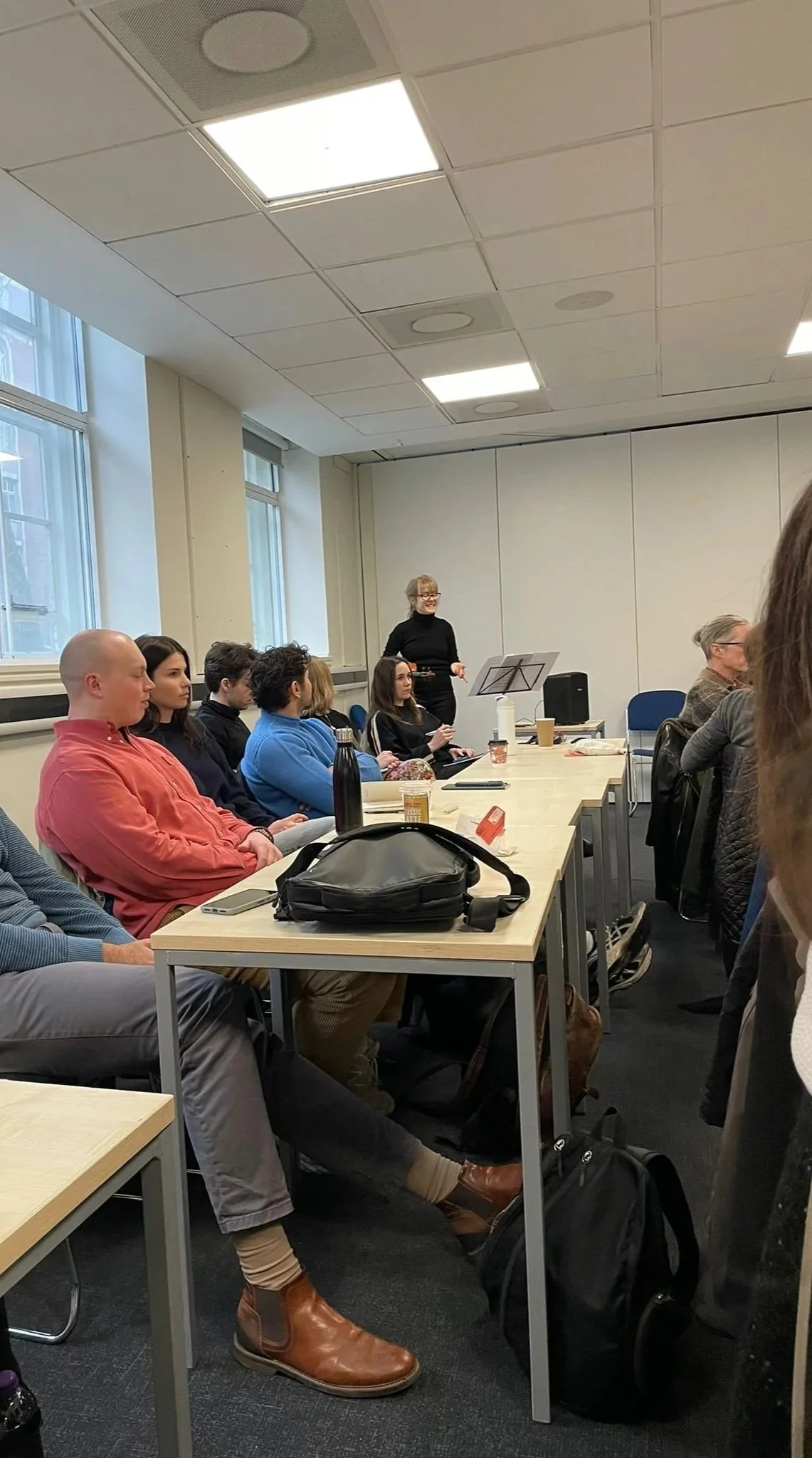
Preparing for this event required careful musical restructuring. I selected and reshaped the opening section of the work, created a customised orchestral backing track and expanded the violin writing to preserve the richness of the score within a solo format. The aim was to maintain orchestral depth while allowing the violin to stand independently and carry clarity and presence.
The lecture format invited me to move seamlessly between performance and commentary, introducing the piece and articulating its historical context, imagery and psychological symbolism. It demanded both technical precision and thoughtful communication.
This project marks a meaningful intersection between music and psychology within my work.
“Talia Ramos is a remarkably deep and compelling violinist, with a rare ability to access the emotional core of the melody she performs. Her playing combines technical excellence with genuine joy and full presence, making each performance feel alive, immersive and deeply felt.
“What truly distinguishes Talia is the richness of her cultural and artistic sensibility. Influenced by her interests in psychoanalysis, cinema, comedy and other art forms, she brings exceptionally tasteful and full-bodied interpretations - something that was also evident in her thoughtful participation in my psychoanalytic talk on Surprise at CFAR about a year ago. Listening to her is not simply hearing music played beautifully, but experiencing an almost textured, intelligent and profoundly human artistic voice.”
— Astrid Zeceña - Psychoanalyst