At the beginning of many corporate events, there is often a subtle sense of formality in the room. As guests begin to arrive, conversations emerge politely and cautiously between colleagues, clients or people meeting for the first time. In large venues and institutional settings especially, the atmosphere can initially feel structured, reserved and, at times, uncomfortably formal.
Live violin changes that atmosphere in a remarkably natural way.
A single instrument played sensitively within the space introduces warmth before guests are fully aware of it. Conversations settle more comfortably into place and the room begins to soften. People slow down slightly, listen differently and engage with one another more openly. The environment starts to feel less functional and more human.
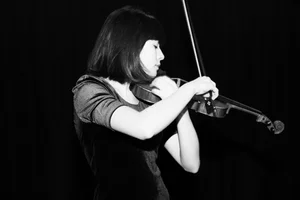
I was reminded of this very clearly during a performance at the Royal Free London NHS Foundation Trust in 2015.
The event took place in the atrium of the Katharine Dormandy Haemophilia Centre and Thrombosis Unit as part of a gathering connected to the North London Adult Haemophilia Network. Alongside presentations and informal discussion, the organisers wanted the environment to feel welcoming and calm for guests arriving into a clinical setting more commonly associated with appointments and treatment.
For this occasion, I curated a programme moving between classical repertoire and lighter musical styles. Minuets, Andantes and Adagios by Mozart, Haydn and Boccherini sat alongside jazz standards, blues and ragtime pieces, creating shifts in atmosphere throughout the evening without disrupting conversation or the flow of the event.
One of the most striking aspects of live performance in these environments is how subtly it changes the emotional texture of a space. The music did not dominate the evening, nor was it intended to. Instead, it softened the formality of the atrium and encouraged a more relaxed and attentive atmosphere around the gathering itself.
That balance is often what organisations are searching for when they choose live music for a corporate event.
Recorded playlists can provide background sound, but live performance introduces something more responsive and immediate. A musician adjusts naturally to the acoustics of the room, the pacing of conversation and the energy of the audience. The performance breathes alongside the event itself.
If you're planning a business event, you may also find my guide How to Choose the Right Live Music for Your Corporate Event helpful.
Why Atmosphere Matters at Corporate Events
Corporate gatherings are often carefully planned in terms of schedule, branding and presentation, yet atmosphere is sometimes treated as secondary. In reality, it influences almost every aspect of how an event is experienced.
The emotional tone of a room affects:
• how comfortably people interact
• how long conversations continue
• how relaxed guests feel
• how attentively people listen
• how memorable the event becomes afterwards
This is particularly important at networking receptions, healthcare events, cultural partnerships, fundraising evenings and brand launches, where interaction and communication sit at the centre of the experience.
Music has the ability to shape both the atmosphere and emotional tone of a corporate event. Live violin performance introduces presence without demanding attention. It fills silence naturally, softens transitions between moments and creates continuity within the event environment.
The Difference Between Recorded Music and Live Performance
Most people recognise immediately when music is being performed live, even if they are not consciously focused on it.
There is a physical presence to live sound that recorded music rarely achieves in the same way. Small changes in phrasing, timing and dynamics respond instinctively to the atmosphere of the room itself.
As a performer, I constantly adjust to what is happening within the space:
• the volume of conversation
• the acoustics of the venue
• the pace of guest arrival
• the mood of the audience
• the transitions between speeches or presentations
This flexibility allows the music to remain integrated within the event rather than feeling imposed upon it.
At corporate events especially, subtlety matters. The aim is rarely spectacle. More often, it is to create warmth, refinement and cohesion within the environment. In my article Is Live Music Better Than a Playlist for an Event, I explore the different roles each can play alongside their benefits.
Choosing the Right Repertoire
Repertoire plays an important role in shaping the character of an event.
Classical pieces can introduce elegance, calmness and structure. Jazz standards and lighter contemporary works often encourage openness and ease within more conversational settings. Some events benefit from a combination of styles that evolve gradually throughout the evening.
At the Royal Free Hospital event, the movement between classical works and lighter jazz influenced repertoire helped reflect the dual nature of the gathering itself. The evening carried both professional seriousness and social connection. The music needed to support both.
Careful repertoire selection is never simply about just choosing “beautiful music.” To me, it is about understanding:
• the purpose of the event
• the identity of the organisation
• the emotional tone of the space
• the balance between listening and conversation
After all, music should feel integrated into the wider experience.
Live Music in Professional Spaces
Corporate venues vary enormously. Some events take place in hotels and private venues, whilst others happen within galleries, healthcare institutions, offices, universities or public buildings. Each environment brings its own atmosphere and practical considerations.
In quieter architectural spaces, acoustic violin often creates a natural intimacy. Larger venues may require amplification to maintain clarity while preserving warmth within the sound.
Positioning within the room also matters greatly. In many settings, the most effective placement is not directly at the centre of attention, but somewhere that allows the music to travel naturally through the space while conversation continues comfortably around it.
These details may seem small, but they significantly shape how live music is experienced by guests.
Music and Human Connection
One of the reasons live violin works so effectively at corporate events is that it introduces a human element into structured environments.
Corporate gatherings can sometimes feel highly scheduled or transactional. Live performance softens this formality. It creates moments of pause and reflection within the movement of the evening, while also becoming a natural topic of conversation for guests.
Guests often respond instinctively. Conversations become more relaxed. People linger slightly longer within the room. The atmosphere becomes less purely functional and more emotionally present.
This shift is difficult to measure directly, but it is often deeply felt. Over the years, I have seen how thoughtfully chosen live music can transform the emotional character of an event without ever becoming intrusive. The relationship between music and emotion extends far beyond live events. I explore the same idea from the perspective of film and visual media in my article Recording Violin for Visual Storytelling.
Live Violin for Corporate Events in London
I provide live violin performance for corporate receptions, healthcare organisations, networking events, brand launches, cultural partnerships and private professional gatherings across London and the United Kingdom.
Each event is approached with careful attention to atmosphere, audience and setting. Repertoire is curated thoughtfully to support the wider experience of the event and create a sense of warmth, refinement and connection within the space.
If you're planning a conference, networking reception, awards evening or brand launch, you can learn more about my live violin performances for corporate events here: