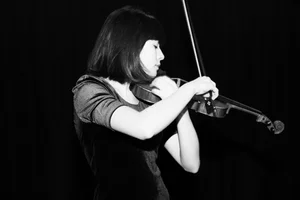
Is Live Music Better Than a Playlist for an Event?
There is a reason people still choose live music, despite carrying millions of songs in their pocket.
Streaming platforms have made almost every piece of music instantly available. A carefully curated playlist can provide hours of uninterrupted listening, requires no rehearsal and can be started with the touch of a button. For many occasions, that is entirely appropriate.
Yet when the moments that matter most come along, a wedding, a proposal, a milestone birthday, a significant anniversary or a corporate celebration, people continue to invite musicians into the room.
Why? The reason is not necessarily that live music is better, but that it offers something fundamentally different and, despite all the convenience that technology offers, live performance is still irreplaceable.
Having performed at corporate events, wedding ceremonies, private celebrations and cultural venues over many years, I have often reflected on this. The answer, I believe, has very little to do with the music itself and everything to do with people.
Are Live Music and Recorded Music Trying to Achieve the Same Thing?
The simplest answer to the question is both yes and no.
A playlist and a live musician can perform exactly the same piece of music. They may even sound remarkably similar. Modern speakers are capable of extraordinary sound quality and streaming platforms give us access to recordings by some of the world's greatest performers.
If the purpose of music is simply to fill silence, then a playlist often does an excellent job.
There are many occasions where I would happily recommend one.
A relaxed family barbecue, a children's birthday party in the garden or an informal gathering with friends may need nothing more than thoughtfully chosen background music. There is no reason to suggest otherwise simply because I happen to be a professional musician.
The purpose of music, however, changes when the occasion itself carries emotional significance.
At a wedding, the music accompanies the moment two people commit their lives to one another. During a proposal, it quietly witnesses a question that may be remembered for decades. At a corporate reception, it helps transform a room full of unfamiliar faces into a place where conversation begins naturally. Within a gallery, it encourages visitors to slow down and experience the exhibition differently.
In each of these settings, music is no longer simply something that can be heard.
It becomes part of the experience itself.
That is where live performance begins to offer something different.
Music Is More Than Sound
One of the most interesting things about music is that we rarely remember it in isolation.
Think about a piece of music that has stayed with you over the years. Chances are, you do not remember it because of the notes themselves. You remember where you were, who you were with or the chapter of your life in which it became meaningful.
The music and the memory have become inseparable. This is something I think about often when preparing for performances.
When someone asks me to play during a proposal or a wedding ceremony, they are not simply choosing a soundtrack. They are selecting a piece of music that will become woven into one of the most significant memories of their lives. Years later, they may hear the same melody unexpectedly in a café or on the radio and find themselves transported back to that moment.
If you're planning a proposal yourself, I explore how music, timing and careful preparation come together in Planning Live Music for a Wedding Proposal.
Recorded music can certainly do this too.
The difference is that live performance becomes part of the memory as it is being created.
The violin is not reproducing a moment that already exists. It is present while that moment is unfolding.
That distinction may seem subtle, but it changes the way people experience the event.
Presence Cannot Be Downloaded
One of the greatest strengths of live music is something that is almost impossible to measure, and that is presence. A recording is fixed. Every note, phrase and pause remains exactly the same, no matter who is listening or where it is played. A musician, however, is responding continuously to the people, the room and the unfolding character of the occasion.
At a recent family celebration, the children arrived later than expected. Before they came, the celebration had been calm and intimate. Within moments of their arrival, the atmosphere became playful and joyful. Because I had anticipated that possibility, I had prepared music from films they would recognise; K-Pop Demon Hunter’s Golden and Moana soundtracks. Soon everyone was singing and dancing together.
At an anniversary dinner, I observed a moment before I was due to perform. There was no cue, no timetable and nobody had asked me to begin at that precise moment. It simply felt like the right time for the music to enter the evening.
That evening reminded me that anniversaries are often less about performance than about accompanying memories already being made. I reflect on that experience in Why Live Music Makes Anniversary Celebrations Unforgettable.
Neither of those moments appeared on the running order or schedule of events, but both became some of the most memorable parts of the evening.
This is perhaps the greatest difference between live music and a playlist.
A playlist follows a programme.
A musician follows people.
Why Live Music Feels Different at an Event
People often describe live music as creating a "better atmosphere". Whilst there is certainly truth in that, I think the explanation runs a little deeper.
Live music changes the relationship between people and the space they are sharing.
Imagine arriving at a corporate reception.
Guests are collecting name badges, greeting colleagues and making polite conversation with people they may never have met before. There is often a gentle hesitation during those first few minutes, as everyone settles into the room and works out where they belong.
Music can help dissolve that hesitation.
Not because people suddenly stop to listen, but because the room begins to feel less formal. Conversation becomes easier. Silences feel less awkward and guests move more naturally through the space.
The same principle applies in different ways across many kinds of events.
At a wedding, live music often provides a sense of anticipation before the ceremony begins.
At a gallery opening, it encourages visitors to slow their pace and spend longer with the artwork.
The relationship between music, architecture and visual art is fascinating in its own right. If that interests you, you may also enjoy reading The Role of Music in Gallery and Exhibition Spaces.
Corporate events present their own challenges too, particularly when music is expected to encourage conversation rather than dominate it. I explore that in greater depth in How to Choose the Right Live Music for Your Corporate Event.
At a private dinner, it creates an intimate ambience that feels special rather than simply well organised.
None of these changes happen because the violin is demanding attention.
In many cases, quite the opposite is true.
The music succeeds precisely because it knows when to step back.
The Importance of Listening
People often assume that the most important skill a musician possesses is the ability to play.
I have gradually come to think it is the ability to listen. Much of my work involves listening; to the organiser long before the event takes place, to the couple explaining why a particular piece matters to them, to how the acoustics of a room change as guests arrive and to the pace at which an event naturally unfolds.
Perhaps this is why I have never thought of performing as simply reproducing notes written on a page.
Every event develops its own rhythm.
Some evenings become lively very quickly while others may unfold gently. Some invite conversation while others encourage quiet reflection.
The role of a musician is not to control that rhythm but to recognise it and work alongside it.
Recorded music cannot make those decisions because it cannot observe what is happening.
Does Live Music Always Make Sense?
Not necessarily.
I think it is important to say this because choosing live music should never feel like an obligation.
If music is simply intended to play quietly in the background for a short period of time, a carefully chosen playlist may be all that is needed.
Likewise, there are events where budget, venue restrictions or practical considerations make recorded music the more sensible option.
There is absolutely nothing wrong with that.
The decision becomes more interesting when music is expected to contribute to the experience itself rather than simply accompany it.
If the aim is to create a memorable proposal, welcome guests into a corporate reception, accompany a wedding ceremony or help mark an important family celebration, then live performance offers qualities that cannot be downloaded or programmed in advance.
If you're specifically planning a wedding, you may also enjoy reading A Guide to Choosing Music for a Civil Wedding Ceremony, where I explore how live violin can support each stage of the ceremony itself.
So, Is Live Music Better Than a Playlist?
After years of performing, I have come to think that this is perhaps the wrong question.
A playlist and a live musician are not competing to do the same job.
A playlist provides carefully selected recordings. A musician shares an experience with the people in the room. There are occasions where a playlist is exactly the right choice, just as there are occasions where live music brings something uniquely human to an event.
Ultimately, the decision comes down to what you want your guests to remember.
If the music is simply there to fill silence, recorded music may do everything you need.
If you hope the music will become part of the memory itself, then inviting a musician into the room offers something that technology, however sophisticated it becomes, still cannot replace.
Live Violin for Events in London
I provide live violin performances for corporate events, weddings, proposals, private celebrations, gallery openings and cultural events across London and the United Kingdom.
Every event begins with a conversation. Understanding the people, the purpose of the occasion and the experience you hope your guests will remember allows the music to become more than simply part of the programme. It becomes part of the story they will tell afterwards.
If you're considering live violin for a corporate event, wedding, proposal or private celebration, you can explore my performances here: